Merritt

Product design + front-end development of an AI-powered performance management platform. Designed in the browser. Shipped in six weeks.

Merritt app - career ladders and 1:1 screens
Outcome Shipped & selling
Cost vs. separate design + dev ~Half
Handoffs Zero

Most design processes ask clients to approve something that doesn't exist yet. A Figma prototype is a simulation: interactions are mocked, scroll is implied, real content is replaced with lorem ipsum. The client says "looks good" and then lives with whatever the developer builds from it.

Amber and Darla didn't do that.

Amber is co-founder and CEO of Merritt, an AI-powered performance management platform. Darla, her CTO co-founder, had back-end engineering covered. What they needed: product design and front-end, delivered as a single workstream, ready to wire up.

The process started in Figma, but not where you might expect. Before any visual design, the work was structural: user journeys, wireframes, information architecture. Merritt has three distinct user roles, each with their own experience, that needed to be mapped and rationalized before anything got built. That thinking happened on the canvas, where it's fast and cheap to move things around.

Once the structure was solid, two screens went to high fidelity, enough to establish the visual language and get Amber and Darla's buy-in. Then everything moved to the browser.
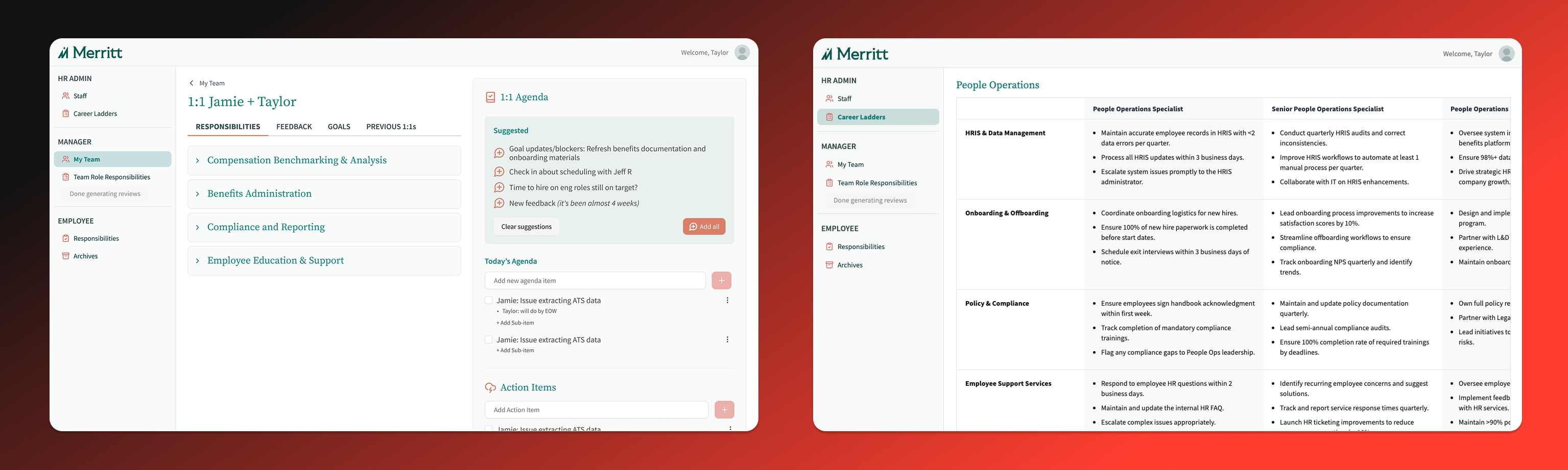
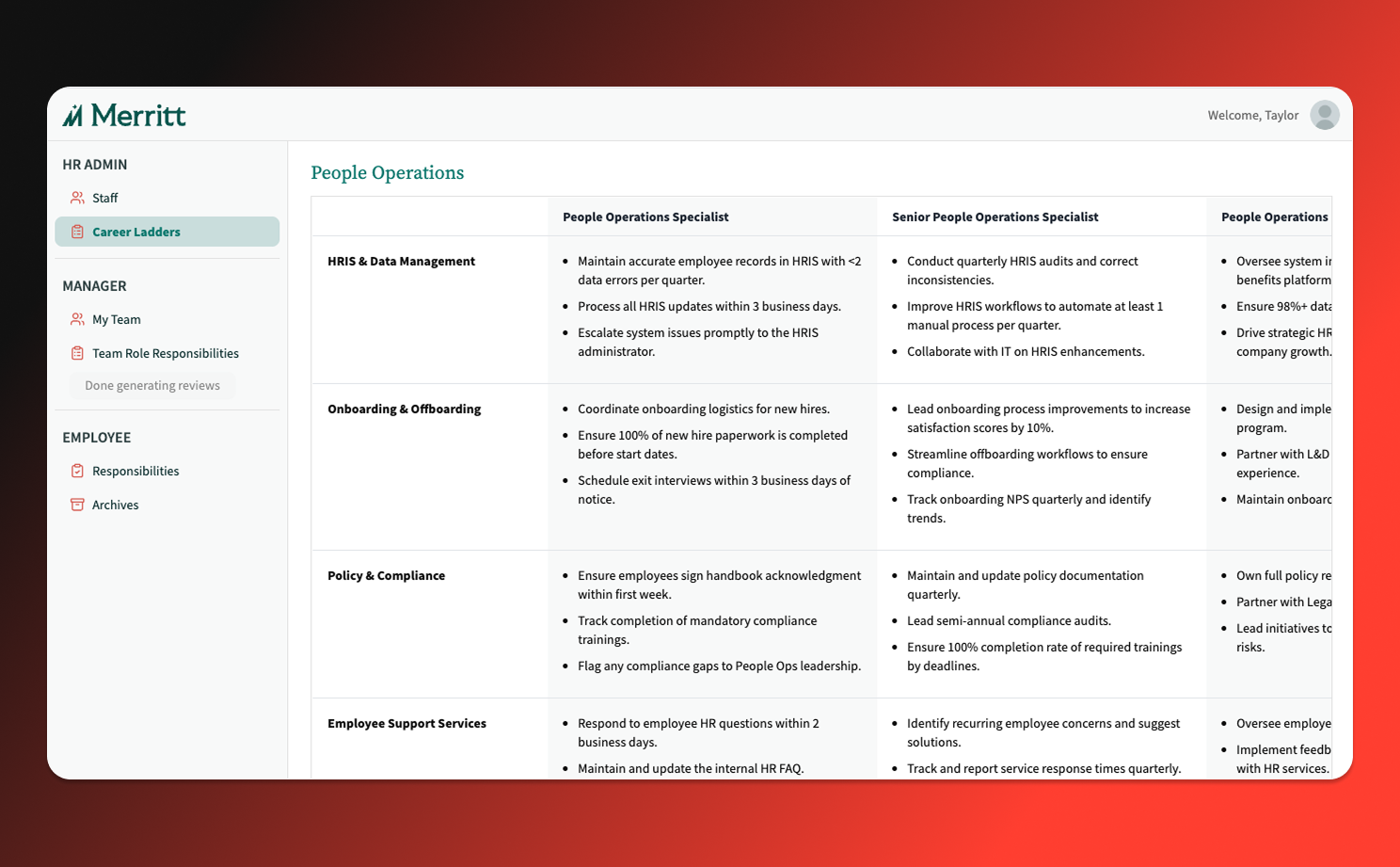
Every screen after those two was designed in code. Which means every screen Amber and Darla reviewed was the real product. Not a mockup of it, not a prototype of it. The thing itself, running in their browser.

Their feedback was against real interactions. Real scroll. Real spacing. When something felt off, it got fixed in the medium where it actually lived. When they approved something, they were approving exactly what would ship.

The traditional design-to-development handoff is lossy in both directions. The developer interprets the Figma spec and something shifts. The client approves a prototype and gets surprised by the real thing. Designing in the browser eliminates both failure modes at once. There's no interpretation step because the designer and the developer are the same person. There's no approval gap because the client is reviewing the actual product.

The result isn't just faster. It's higher fidelity at every stage: higher fidelity design decisions, higher fidelity client feedback, higher fidelity final product.

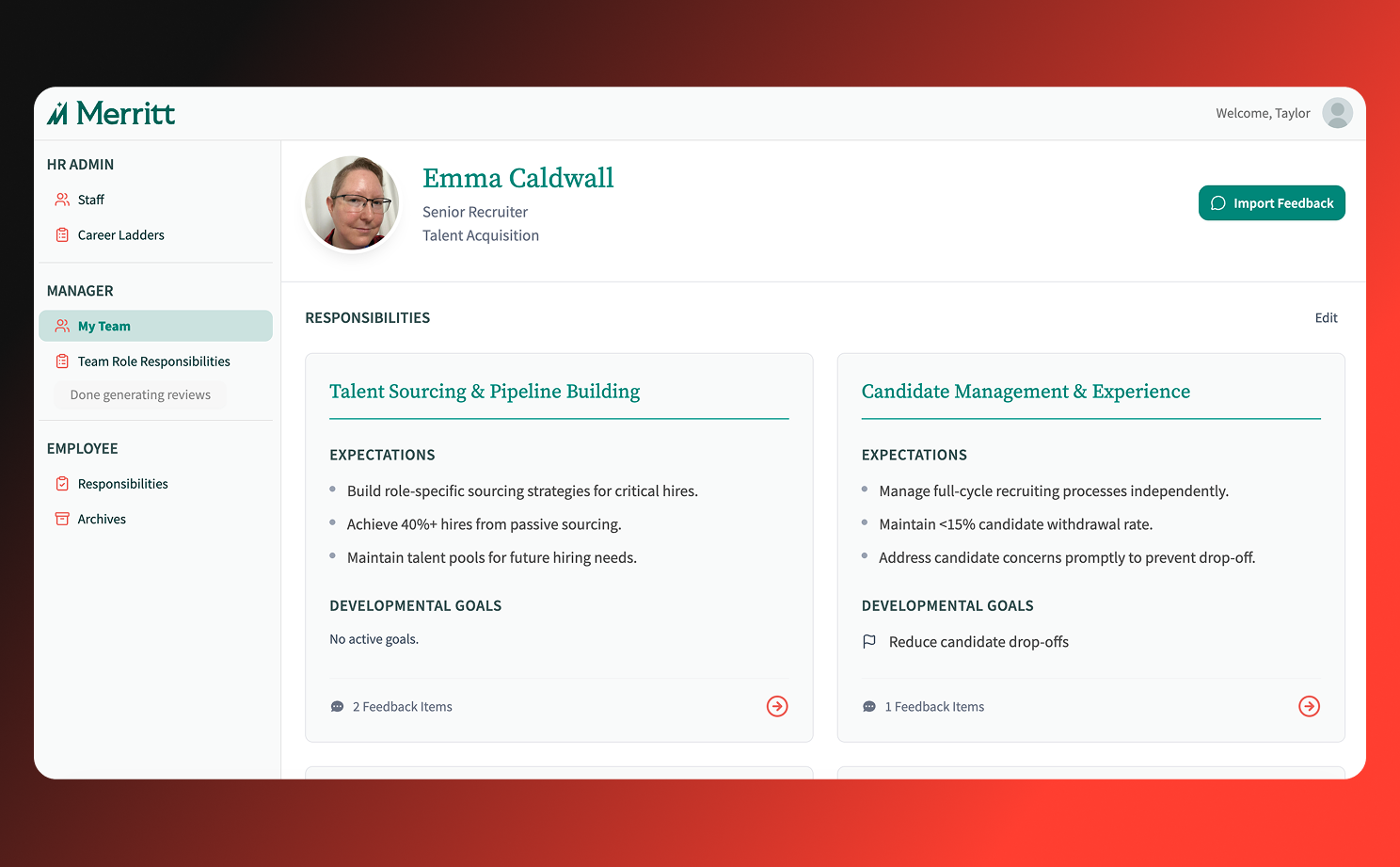
Merritt - Figma direction approval screen Figma - direction approval
Merritt - shipped product screen Shipped - designed in code
Step 01

Figma - flows, structure, 2 screens

Used for what Figma is good for: building consensus on structure and getting directional approval. Nothing more.

Step 02

Everything else: designed in the browser

Interaction design - how things are laid out, how they work - happened where it actually lives. Not approximated in Figma first.

Step 03

Ship

No handoff. No translation layer. The design and the build were the same workstream.

Six weeks. Six to ten screens. Three user roles with distinct experiences, all mapped, designed, and built as a single workstream handed directly to Darla's back-end ready to integrate.

Merritt is live and in front of early customers. The platform sets clear expectations on day one, coaches managers through 1:1s, guides feedback with AI, and auto-drafts performance reviews grounded in real data.

Cost: design and front-end as a single line item instead of two separate engagements.

"Working with Jeremy was a dream. He took the time to deeply understand what we were building and why, we could tell immediately he was invested in the success of our product. We could tell him what users needed to feel on a certain page, and he could translate that into a design. Jeremy really felt like PART of our team. He ran with our ideas but pushed back when what we had in mind didn't make sense. And most important, we're thrilled with the results! We get complemented by the look of our product constantly."

Amber Co-Founder & CEO, Merritt

This is what it looks like when design and front-end are the same job: real structural thinking upfront, visual direction locked fast, then straight to the browser. No artifact layer, no translation tax, no approval gap.

Six weeks from start to live product. The product that ships is the product that was designed and the product Amber and Darla approved. For Merritt, those were never three different things.

Ready to build.

Book a free 30-minute call. We'll talk through your product idea, whether it's a fit, and what a realistic timeline looks like.

Book a Call